
About James Scholfield
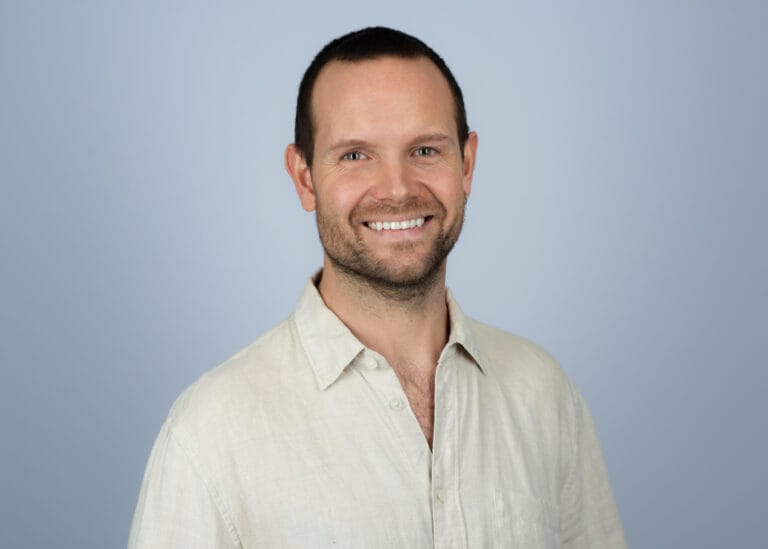
James Scholfield’s path into embodied coaching did not begin with a clear career plan or a defined profession. It began through his own experience of anxiety, emotional struggle, and a persistent sense that something deeper was asking to be understood.
For a long time, he was driven by external direction, focused, capable, and often in motion, yet internally there was a sense of tension, disconnection, and effort that never fully resolved. On the surface things could look fine, but underneath there was often anxiety, self-pressure, and a quiet sense of not quite feeling at home in himself.
Like many of the people he works with, he knows what it is like to feel overwhelmed, to overthink, to carry emotional weight in silence, and to lose touch with a grounded sense of self.
Over time, he began to see that these experiences were not just psychological “problems to solve,” but expressions of something deeper, patterns of protection, identity, and meaning being carried in both the mind and the body.
What changed things for him was not trying to fix or override these experiences, but learning to slow down enough to listen to them, and in doing so, begin to see the patterns that were shaping how he lived, related, and made decisions. Over time, this opened something essential in him, a clearer sense of what was true beneath fear and conditioning.
This is where his main purpose emerged: to help people see through the patterns, protections, and conditioning that shape their inner and outer life, so they can reconnect with what is true for them and how they genuinely want to live.
Alongside this, he became increasingly interested in deeper questions of identity, meaning, and purpose, especially what it means to live in a way that feels authentic rather than shaped by expectation, adaptation, or pressure. This continues to inform both his personal life and his practice.
He offers body-based inner work for people experiencing anxiety, emotional overwhelm, relational difficulty, or a deeper sense of disconnection from themselves and their life.
This work is collaborative, grounded, and relational. There is no expectation to perform, explain everything clearly, or arrive with certainty. Sessions begin with whatever is present.
Often, what emerges first is the body.
Tension in the chest, tightness in the jaw, a knot in the stomach, numbness, restlessness, or a subtle sense of unease. These are not problems to eliminate, but signals that carry information about how we have learned to hold ourselves in the world.
Together, things are slowed down and these signals are met with more attention and care.
Rather than trying to analyse or fix experience, there is an invitation to understand it more deeply. Over time, this can support shifts in how a person relates to themselves, moving from automatic patterns of protection, overthinking, or disconnection toward greater presence, clarity, and emotional awareness.
This often opens space for deeper exploration of identity, meaning, and purpose, especially when life feels externally functional but internally unclear or misaligned.
His work is informed by training in body-oriented coaching, mindfulness, and psychotherapy, alongside ongoing personal exploration of embodiment and inner experience.
He is a certified Body-Oriented Coach through The Somatic School, a Mindfulness Practitioner and Meditation Teacher with Breathworks, and he has trained in psychotherapy at the Centre for Counselling and Psychotherapy Education.
These approaches inform his work, but what matters most is creating a space where people can slow down enough to reconnect with themselves in an honest and grounded way.
This work is not about becoming someone different.
It is about coming into deeper contact with oneself beneath the layers of stress, adaptation, and protection that we all develop in order to navigate life, and in that contact, beginning to recognise what is true and how to live from that place.
If this resonates, you are very welcome to get in touch.
A short, no-pressure call can be arranged to explore whether working together feels supportive and aligned.